Suzume-no-Yu: A Volcanic Onsen in the Aso Caldera, Japan
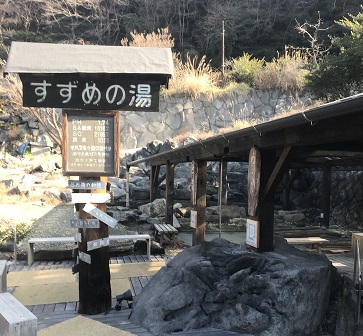
Located within the Aso Caldera, one of the world’s largest volcanic calderas, Suzume-no-Yu is an onsen believed to be associated with post-caldera volcanic activity.
Here, volcanic gases rising from deep underground are thought to mix with shallow groundwater, forming the onsen water. As the water reaches the surface, volcanic gases that remain undissolved or escape from the water form bubbles, eventually releasing the gases into the atmosphere.
The gentle popping sounds of these bubbles resemble the chirping of sparrows. This distinctive natural phenomenon is said to have given the outdoor bath its traditional name, Suzume-no-Yu, meaning “Sparrow’s Bath.”
Onsen Science – The Purpose and Limits of Classification
Are Onsen Really Different, or Do We Just Classify Them Differently?
Understanding the Science, Purpose, and Limitations of Onsen Classification
FS Publishing Japan | Onsen Science
Introduction: What Exactly Is an Onsen?
In Japan, the word onsen (温泉) is commonly translated into English as “hot spring.” However, these two expressions do not have exactly the same meaning.
The English term hot spring generally refers to naturally heated groundwater emerging at the Earth’s surface.
In Japan, however, onsen has a broader meaning. It is associated with the geological origins and chemical characteristics of spring water, traditional bathing practices, health-related uses, and legal definitions.
Interestingly, under Japanese law, water does not necessarily have to be hot to qualify as an onsen. Even relatively cool groundwater may be legally recognized as an onsen if it contains certain substances at specified concentrations [1, 2].
Strictly speaking, Japan’s legal definition also includes certain underground-derived water vapor and gases.
Thus, onsen is more than a simple geological term. It is also a scientific, cultural, and legal concept.
For this reason, we use the Japanese word onsen throughout this article when discussing Japanese spring waters and their associated systems of classification.
But this raises a fundamental question:
Do different classifications reveal fundamental differences in nature, or do they simply reflect the different purposes for which we classify things?
To answer this question, we must first consider why humans classify things at all.
1. Why Do We Classify Things?
Humans have always tried to organize the world around them.
We classify animals, plants, rocks, minerals, foods, and diseases. Classification allows us to organize information, identify similarities and differences, and communicate knowledge efficiently.
Without classification, understanding the enormous diversity of the natural world would be extremely difficult.
However, classification has an important characteristic that is often overlooked.
The meaning and usefulness of a classification depend on its purpose.
Consider a familiar example: the tomato.
From a botanical perspective, a tomato is a fruit because it develops from a flower and contains seeds.
In cooking, however, tomatoes are generally treated as vegetables because of their culinary uses.
Which classification is correct?
Both are useful because they answer different questions.
The botanist is interested in plant structure and reproduction. The chef is interested in ingredients and cooking.
The same object can therefore belong to different categories depending on the purpose of classification.
This principle is not merely a matter of convenience.
Classification systems influence how we organize knowledge, communicate information, and sometimes even make social or administrative decisions.
Bowker and Star (1999) explored these broader implications in their influential book Sorting Things Out: Classification and Its Consequences [3].
The lesson is simple but important:
Before asking whether a classification is correct, we should first ask what it was designed to explain.
This principle is particularly relevant to onsen science.
A geologist, a medical researcher, a government official, and an ordinary bather may all examine the same onsen, but they are interested in different aspects of it.
Consequently, the classification systems they require are not necessarily the same.
2. Three Different Purposes of Onsen Classification
Onsen provide an excellent example of how classification changes according to its purpose.
2.1 Geological Classification: How Was the Onsen Formed?
From a geological perspective, the most important questions concern the origin and evolution of the water.
Where did it come from?
How was it heated?
What kinds of rocks did it interact with?
Did volcanic gases contribute to its chemical composition?
Onsen can form through various geological processes involving groundwater circulation, geothermal heat, water–rock interactions, and sometimes magmatic fluids.
For example, consider two onsen containing high concentrations of sodium and chloride ions.
Their major chemical compositions may be quite similar.
However, one may contain a substantial contribution from ancient seawater preserved within sedimentary formations, while another may be associated with a volcanic hydrothermal system.
Although both waters may be classified as chloride-rich onsen, their geological histories can be entirely different.
This illustrates an important limitation of classification based solely on dissolved chemical components.
Similar chemical compositions do not necessarily indicate similar geological origins.
To understand how an onsen formed, geologists may need additional information, including geological setting, trace elements, isotope ratios, dissolved gases, and the characteristics of surrounding rocks.
The chemical composition of geothermal waters can also provide valuable information about water–rock interactions and chemical equilibrium.
Giggenbach (1988), for example, demonstrated how the relative concentrations of major dissolved cations can be used to evaluate chemical equilibrium in geothermal systems [4].
Such approaches show why chemical analysis is an essential tool in geological interpretation.
However, chemical composition alone does not always provide a unique explanation of origin.
In this context, classification should help us investigate the geological processes responsible for the formation of onsen.
2.2 Physiological Classification: How Does Onsen Water Affect the Human Body?
Now consider a completely different question.
What happens to the human body when we bathe in an onsen?
From this perspective, the geological origin of the water may be less important than its physical and chemical properties.
Relevant factors include water temperature, pH, dissolved gases, chemical composition, bathing duration, and individual physiological conditions.
Consider carbon dioxide as an example.
When sufficient dissolved CO₂ is present in bathwater, it can influence cutaneous blood circulation.
Hartmann and colleagues (1997) compared the effects of CO₂-enriched water and ordinary freshwater immersion on the microcirculation and oxygen tension of the skin [5].
Their findings indicated that CO₂-enriched bathing produced measurable physiological responses beyond those observed during ordinary water immersion under the experimental conditions.
Additional research has investigated the effects of applying gaseous CO₂ to the skin.
Finžgar and colleagues (2015) reported changes in cutaneous microcirculation following transcutaneous CO₂ exposure [6].
These studies suggest that carbon dioxide can influence peripheral circulation.
However, the experimental conditions and exposure methods differ, and their findings should not automatically be interpreted as proof of long-term clinical benefits from ordinary onsen bathing.
Now consider bicarbonate ions (HCO₃⁻).
Bicarbonate ions and dissolved carbon dioxide are chemically related through the carbonate equilibrium system.
However, they have different physical and chemical properties.
Unlike neutral CO₂ molecules, bicarbonate ions carry an electrical charge, which generally limits their direct passage through intact skin.
Therefore, the presence of bicarbonate ions should not be interpreted as physiologically equivalent to the presence of dissolved CO₂.
This distinction illustrates an important principle.
Substances that are closely related chemically do not necessarily produce the same physiological effects.
From a geochemical perspective, CO₂ and HCO₃⁻ belong to the same chemical system.
From a physiological perspective, however, their behavior must be evaluated separately.
The geological classification of an onsen cannot, by itself, explain how bathing in its water will affect the human body.
Similarly, the presence of a particular chemical component does not necessarily establish a clinically proven health benefit.
Understanding physiological effects requires evidence concerning exposure, biological mechanisms, and actual health outcomes.
2.3 Legal Classification: What Qualifies as an Onsen?
A third approach to classification serves a completely different purpose.
Governments need clear and consistent rules to regulate natural resources, establish administrative procedures, and protect public interests.
Japan provides an interesting example.
Under Japan’s Hot Springs Act, originally enacted in 1948, underground-derived water may qualify as an onsen if its temperature at the source is at least 25°C or if it contains certain substances at or above specified concentrations [1].
This means that even water cooler than 25°C may legally qualify as an onsen.
Now imagine two underground water sources.
One has a temperature of 24.9°C.
The other has a temperature of 25.1°C.
Assuming neither satisfies the alternative chemical criteria, the first does not qualify as an onsen under the temperature requirement, while the second does.
But does a difference of only 0.2°C indicate a fundamental difference in geological origin or physiological properties?
Not necessarily.
The legal threshold provides a clear administrative boundary.
It does not necessarily represent a fundamental boundary in nature.
Japan also uses a separate system of mineral spring analysis and classification based on chemical characteristics.
The Ministry of the Environment’s Guidelines for the Analysis of Mineral Springs establish analytical procedures and criteria used to characterize mineral spring waters [7].
These guidelines also distinguish between waters that qualify legally as onsen and those that meet additional criteria for therapeutic mineral springs.
This distinction is important.
The legal definition of an onsen and the classification of its chemical characteristics are related, but they are not identical.
Moreover, neither should automatically be interpreted as a complete explanation of geological origin or physiological effects.
A legal classification tells us how something is treated under the law. It does not necessarily explain how it formed or how it affects the human body.
3. Nature Does Not Always Have Clear Boundaries
One of the most important limitations of classification is that natural phenomena are often continuous, while classification systems divide them into separate categories.
Consider the carbonate system in water.
Dissolved carbon dioxide, bicarbonate ions, and carbonate ions are connected through chemical equilibria:
CO₂(aq) + H₂O ⇌ H⁺ + HCO₃⁻
HCO₃⁻ ⇌ H⁺ + CO₃²⁻
Their relative proportions change continuously depending on pH and other environmental conditions.
Nevertheless, a classification system may divide waters into different categories according to the concentrations of particular chemical components.
Such classifications are useful for describing and comparing water samples.
However, crossing a classification boundary does not necessarily mean that the underlying natural system has undergone a sudden fundamental change.
The boundary may simply reflect a practical decision about how information should be organized.
This leads to an important principle:
Classification boundaries are not always natural boundaries.
The distinction is especially important when studying complex systems such as onsen, where geological processes, chemical reactions, and physiological effects are closely interconnected.
4. Can a Classification Be Correct but Still Misleading?
Yes.
A classification system can be entirely appropriate for its intended purpose while becoming misleading when applied to a different question.
A legal classification may be excellent for administrative consistency but unsuitable for explaining geological processes.
A chemical classification may accurately describe the major dissolved components of onsen water but reveal little about its origin.
A geological classification may explain the development of a hydrothermal system but provide insufficient information about the physiological effects of bathing.
None of these classification systems is necessarily wrong.
The problem arises when we expect one system to answer questions it was never designed to address.
This is not unique to onsen.
Similar issues arise in medicine, biology, environmental science, and many other scientific disciplines.
As Bowker and Star discussed, classification systems are not simply neutral lists of categories. They are also tools that shape how information is organized and interpreted [3].
Classification is useful because it simplifies a complex reality.
However, every simplification inevitably leaves out some information.
Therefore, the scientific value of a classification system should be evaluated in relation to the purpose for which it was developed.
5. From Memorizing Onsen Types to Understanding Onsen Science
When people begin learning about onsen, they often encounter lists of spring types and their commonly described characteristics.
In Japan, onsen waters are classified into several recognized spring types, including simple springs, chloride springs, bicarbonate springs, sulfate springs, sulfur springs, and others [7, 8].
These categories provide useful information about the chemical characteristics of the water.
However, memorizing the names of different onsen types is not the same as understanding onsen science.
A deeper understanding requires us to ask different kinds of questions.
How was the onsen formed?
Why does its water contain particular dissolved substances?
How do those substances behave under different chemical conditions?
Which components can interact with the human body?
What physiological effects are supported by scientific evidence?
And what do legal and administrative classifications actually tell us?
These questions are related, but they are not interchangeable.
An onsen classification system should be evaluated according to how effectively it answers the questions for which it was designed.
Rather than treating existing categories as absolute descriptions of nature, we should recognize them as tools for understanding particular aspects of a much more complex system.
6. Conclusion: Classification Is a Tool, Not Nature Itself
The ultimate purpose of science is not simply to divide the natural world into categories.
Its deeper purpose is to discover the relationships, processes, and mechanisms that explain what we observe.
Classification helps us organize information, compare phenomena, communicate knowledge, and identify patterns.
But classification is only a starting point.
To understand onsen scientifically, we must distinguish between systems designed for legal administration, those used to describe chemical composition, those developed to investigate geological origins, and those relevant to physiological effects.
Each has its own value and limitations.
The most important question is therefore not simply:
“Which category does this onsen belong to?”
Instead, we should ask:
“What does this classification actually tell us, and what does it leave unexplained?”
Nature does not follow our classification systems.
We create classification systems to understand nature.
And as our scientific understanding advances, our classifications should be open to revision and improvement.
Ultimately, understanding onsen means looking beyond the names of spring types and exploring the natural processes and scientific principles behind them.
References and Further Reading
[1] Government of Japan. (1948, as amended).
Hot Springs Act (Onsen Act), Act No. 125 of 1948.
Japanese Law Database, e-Gov.
Official Japanese legislation
[2] Japan Onsen Association. (n.d.).
What Is Onsen?
An English-language explanation of Japan’s legal definition of onsen and related classification criteria.
Japan Onsen Association — What Is Onsen?
[3] Bowker, G. C., & Star, S. L. (1999).
Sorting Things Out: Classification and Its Consequences.
MIT Press.
DOI: 10.7551/mitpress/6352.001.0001
MIT Press — Book Information
[4] Giggenbach, W. F. (1988).
Geothermal solute equilibria. Derivation of Na-K-Mg-Ca geoindicators.
Geochimica et Cosmochimica Acta, 52(12), 2749–2765.
DOI: 10.1016/0016-7037(88)90143-3
View Publication
[5] Hartmann, B. R., Bassenge, E., & Pittler, M. (1997).
Effect of carbon dioxide-enriched water and fresh water on the cutaneous microcirculation and oxygen tension in the skin of the foot.
Angiology, 48(4), 337–343.
DOI: 10.1177/000331979704800406
PubMed — Article Information
[6] Finžgar, M., Melik, Ž., & Cankar, K. (2015).
Effect of transcutaneous application of gaseous carbon dioxide on cutaneous microcirculation.
Clinical Hemorheology and Microcirculation, 60(4), 423–435.
DOI: 10.3233/CH-141898
PubMed — Article Information
[7] Ministry of the Environment, Japan. (2014).
Guidelines for the Analysis of Mineral Springs (Revised 2014).
Nature Conservation Bureau, Ministry of the Environment.
Original Japanese title: 鉱泉分析法指針(平成26年改訂).
Official Guidelines (PDF, Japanese)
[8] Japan Onsen Association. (n.d.).
Qualities of Various Types of Spring Water.
An English-language overview of Japan’s recognized onsen spring types and their characteristics.
Japan Onsen Association — Spring Classification
About Onsen Science
Onsen Science is an interdisciplinary approach to understanding Japanese onsen through geology, geochemistry, physiology, and the scientific study of bathing.
Rather than relying solely on traditional spring-type names or popular rankings, it explores how onsen waters form, how their chemical properties develop, and how bathing conditions may influence the human body.
FS Publishing Japan
Exploring the Science Behind Nature and Everyday Life
Scientific note: This article discusses the interpretation of onsen classification systems. References to physiological mechanisms do not imply that specific onsen types provide clinically proven therapeutic benefits.